Master Printmaking Archive & Workshop · Est. 2026
Taller PosadaWorkshop & Elevated Stature · 19th-Century Mexican Zinc Etchings & Penny Broadsides
The calaveras, corridos and street broadsides that Manuel Manilla and José Guadalupe Posada cut for the Antonio Vanegas Arroyo press in Mexico City — sold for a few centavos, read aloud in the plazas, and gathered here from the public-domain collections of the institutions that hold them.
300 PPI Museum Standard · Never Enlarged · Primary Archive Source Named on Every Print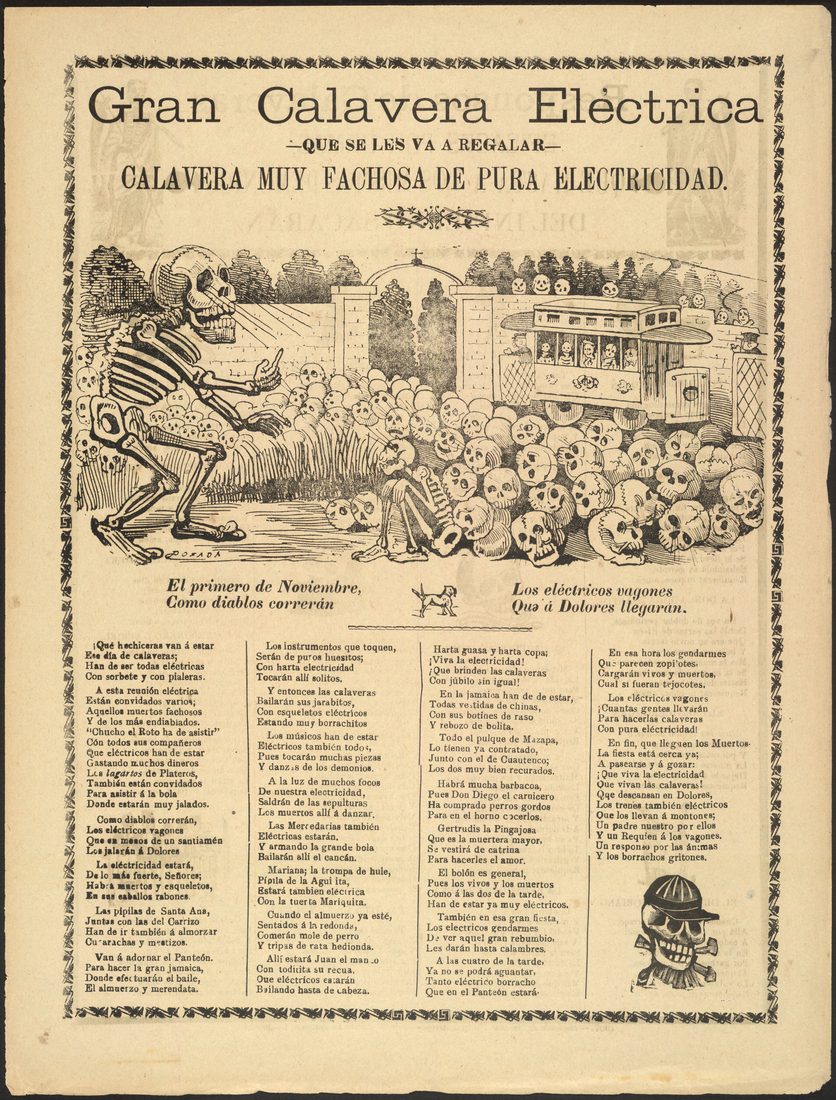
Library of Congress, Prints & Photographs · No known restrictions
Master 5464 × 7188 px · native 18.2 × 24.0 in @ 300 PPI
loc.gov/pictures/item/99615924300 PPI Museum Standard · Never Enlarged · Primary Archive Source Named on Every Print
The Archive · Room I
Cut in type-metal and zinc, printed on tissue-thin color stock
Each plate below is shown as a reduced web preview. The print you receive is made from the institution’s own master file, at a size that file holds at 300 pixels per inch or smaller — never stretched — with the holding institution and its record number set on the margin.
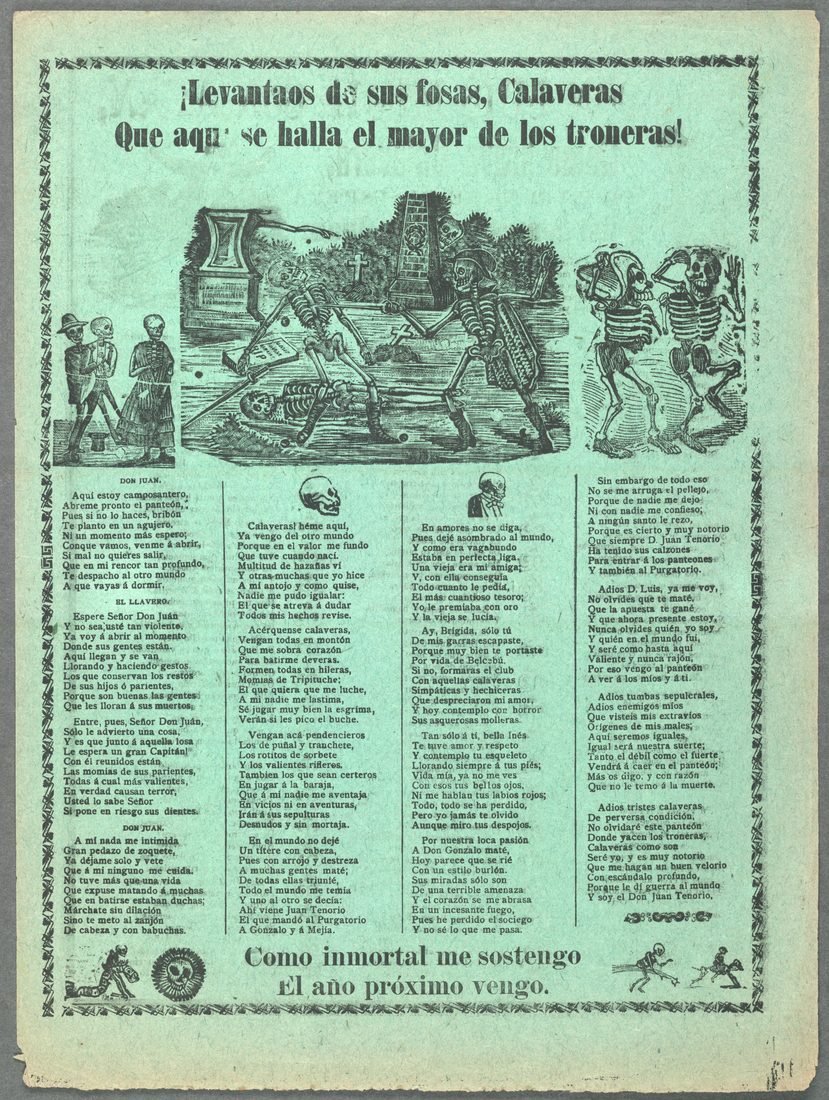
Library of Congress · 5262 × 6985 px
native 17.5 × 23.3 in
loc.gov 99615911300 PPI Museum Standard · Never Enlarged · Primary Archive Source Named on Every Print
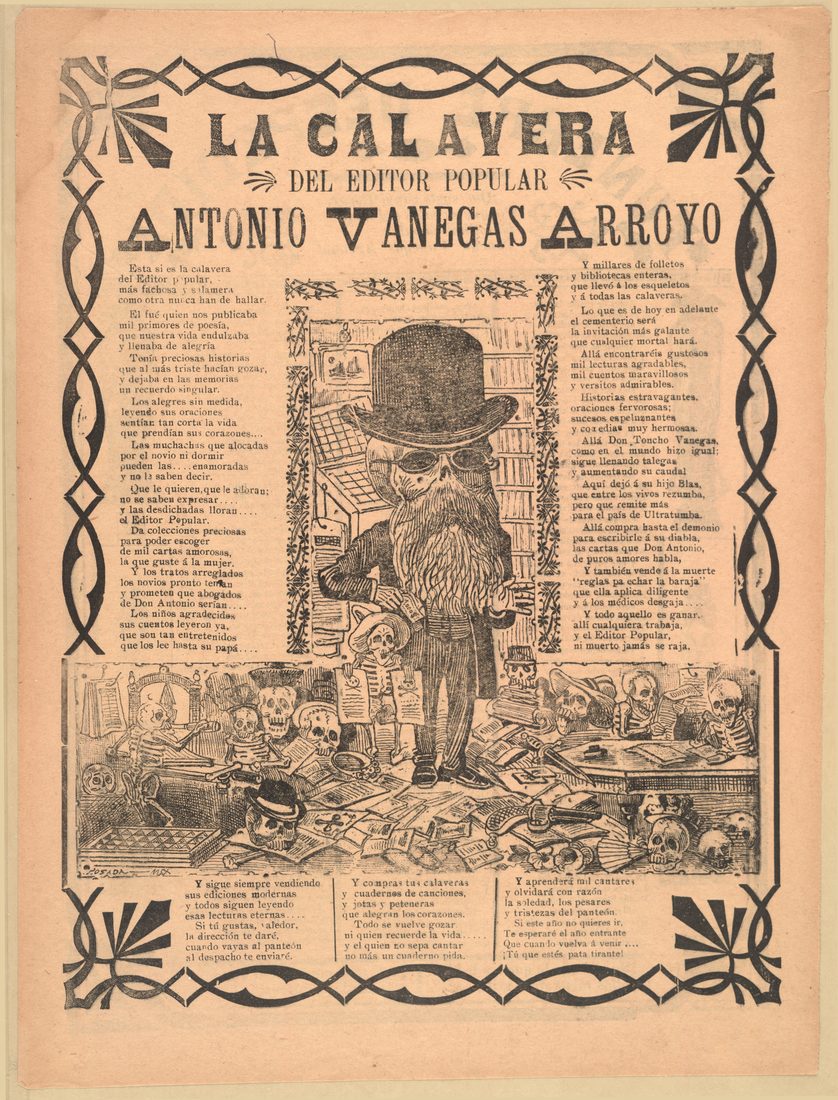
Library of Congress · 4816 × 6325 px
native 16.1 × 21.1 in
loc.gov 99615950300 PPI Museum Standard · Never Enlarged · Primary Archive Source Named on Every Print
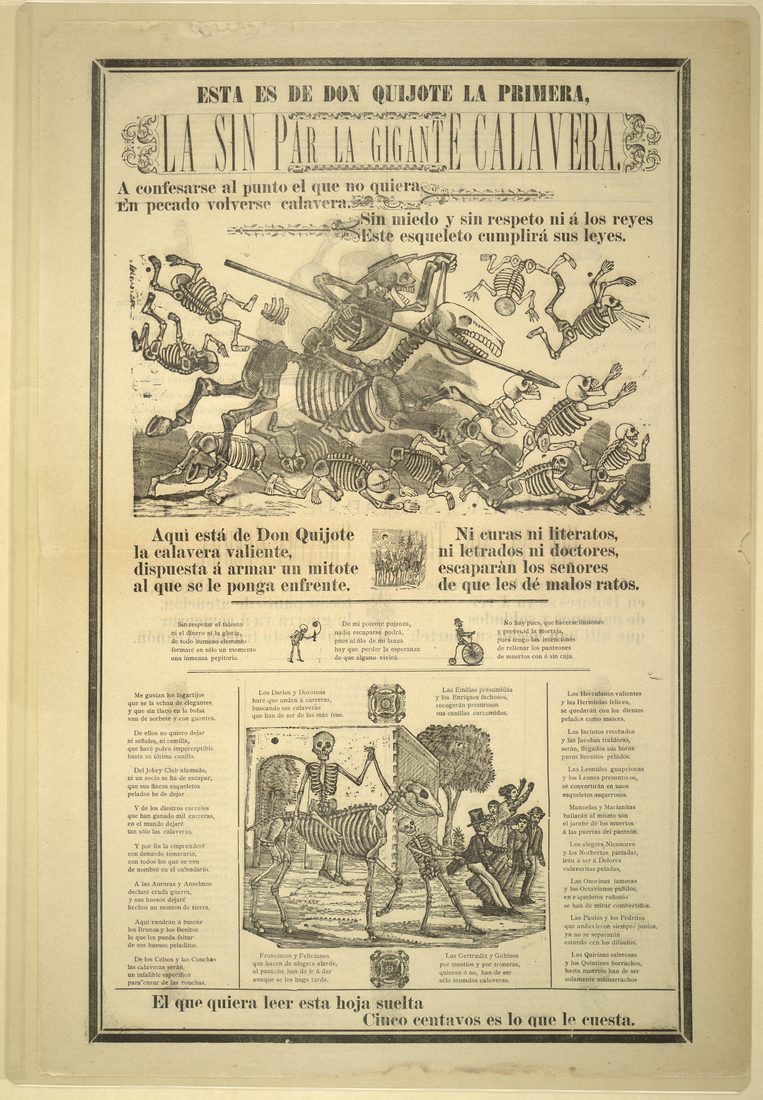
Library of Congress · 3864 × 5571 px
native 12.9 × 18.6 in
loc.gov 99615945300 PPI Museum Standard · Never Enlarged · Primary Archive Source Named on Every Print
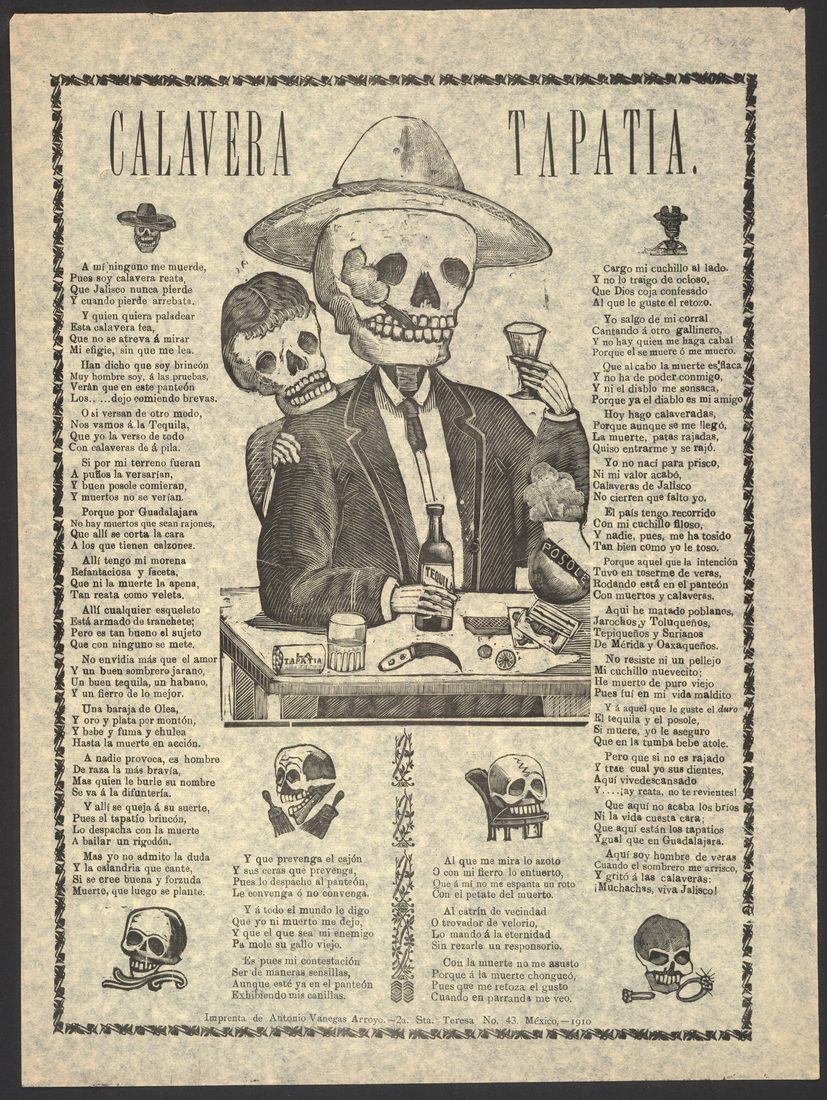
Library of Congress · 4622 × 6148 px
native 15.4 × 20.5 in
loc.gov 99615908300 PPI Museum Standard · Never Enlarged · Primary Archive Source Named on Every Print
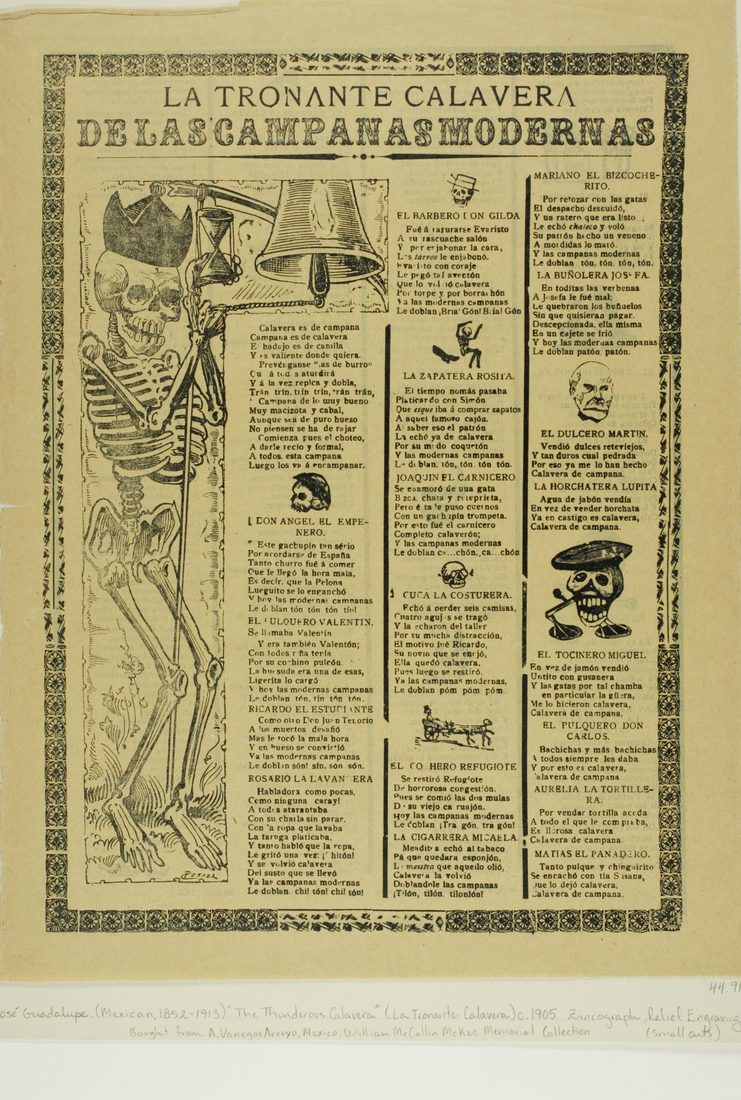
Art Institute of Chicago · CC0 · 2248 × 3337 px
native 7.5 × 11.1 in · 5×7 plate
artic.edu 52011300 PPI Museum Standard · Never Enlarged · Primary Archive Source Named on Every Print
52 hold 11×14 in · 58 hold 8×10 in · 77 hold 5×7 in · 1 postcard · 1 composite-only.
Works by other artists that arrived inside mixed download sets are set aside, not sold under Posada’s name.
8-Bracket Artistic Lineage Tree
From the Vanegas Arroyo press to Chicago’s Pilsen workshops
Open a bracket to follow the line. Bracket 1 traces the relief print from 1880s Mexico City to the printmakers of Chicago; Brackets 2 through 8 are reserved for lines still being researched and will be filled only when each link can be sourced.
Bracket 1The Penny Broadside Line
- c. 1830 – 1895 · Mexico CityManuel Manilla
The first illustrator-engraver at Antonio Vanegas Arroyo’s shop, from 1882. Curators now credit him as the originator of the satirical calavera; many sheets once given to Posada are being re-attributed to him.
Sources: NYPL · SNAC · Online Archive of California
- 1852 – 1913 · Aguascalientes → Mexico CityJosé Guadalupe Posada
Joined Vanegas Arroyo around 1890 and turned Manilla’s skeletons into a national image language, in type-metal engravings and zinc relief etchings for broadsides, chapbooks, corridos and games.
Sources: The Met · MoMA · Library of Congress
- 1880s – 1917 and after · Mexico CityThe Antonio Vanegas Arroyo Press
The popular publisher whose cheap color-stock sheets carried news, crime, disaster, ballads and Day of the Dead verse to people who could not afford a newspaper. Blocks by Manilla and Posada kept being reprinted long after both men died.
Sources: Princeton University Art Museum · Indiana University Libraries
- 1937 – present · Mexico CityTaller de Gráfica Popular
Founded by Leopoldo Méndez, Pablo O’Higgins and Luis Arenal, the People’s Graphic Workshop claimed Posada as its precursor and carried his socially conscious, widely affordable print forward — Méndez even cut a homage of Posada at work in his shop.
Sources: Library of Congress · LACMA · The Met
- 1923 – 2005 · Milwaukee → ChicagoCarlos Cortéz Koyokuikatl
Wobbly, poet and printmaker who settled in Chicago in 1965, co-founded the Movimiento Artístico Chicano (MARCH) in 1975, and cut large linocut and woodcut poster-portraits such as Joe Hill — work shaped by the TGP and by Posada.
Sources: Smithsonian American Art Museum · Hyperallergic · IWW archive
- 2010 – present · Pilsen, ChicagoInstituto Gráfico de Chicago
A Pilsen printmaking collective founded to continue the Latino print tradition. Its Grabadolandia fair marked the centennial of Posada’s death in 2013, and the National Museum of Mexican Art commissioned it to recreate three of Cortéz’s print blocks for his centennial.
Sources: Denison Museum · National Museum of Mexican Art
Bracket 2Reserved
Slot open · to be filled when every link is sourced
Bracket 3Reserved
Slot open · to be filled when every link is sourced
Bracket 4Reserved
Slot open · to be filled when every link is sourced
Bracket 5Reserved
Slot open · to be filled when every link is sourced
Bracket 6Reserved
Slot open · to be filled when every link is sourced
Bracket 7Reserved
Slot open · to be filled when every link is sourced
Bracket 8Reserved
Slot open · to be filled when every link is sourced
The 1911–1913 Working-Class Crucible
1911–1913: From Mexico City Zinc Etchings to the Shop Floor The 1,000-Lives Bridge
In March 1911 a fire in a New York garment shop killed 146 workers. In January 1913 José Guadalupe Posada died in Mexico City, the engraver who had spent two decades cutting news, strikes and calaveras for people who could not afford a newspaper. Two cities, twenty-two months apart, one subject: the people who do the work. This is the line that ties our print archive to our labor archive.
Posada’s penny broadsides
Zinc relief etchings and type-metal cuts for the Vanegas Arroyo press, sold for centavos and read aloud in the plazas. Posada dies on 20 January 1913.
Triangle Shirtwaist
146 garment workers, most of them young immigrant women, die behind locked doors on the eighth, ninth and tenth floors. The fire reshapes American labor and safety law.
Taller de Gráfica Popular
Leopoldo Méndez, Pablo O’Higgins and Luis Arenal name Posada their precursor and turn the linocut toward unions and campesino movements.
Carlos Cortéz Koyokuikatl
The IWW poet-printmaker carries that line into Chicago and Pilsen, carving labor portraits such as Joe Hill (1979). His prints remain under copyright and are not sold here.
Studio 1913 & Union Roots
Studio 1913, a union-made shirt line opening soon in memory of the 146, and Union Roots, a sourced map of 21,223 American union locals.
The 1,000-Plates Living Archive is the long goal: a thousand public-domain plates, each printed at its native size, each naming the museum or library that holds it. Today the archive counts 189 audited plates. It grows one sourced plate at a time, never by enlarging a file to fill a gap.
Studio 1913 shirts follow the same discipline as the prints: one or two quiet inks, warm bone and ash grey on black union-made blanks, in the manner of a 1911 letterpress sheet or a Posada zinc etching.
Sources: Library of Congress (Vanegas Arroyo broadsides) · The Met and MoMA (Posada) · Cornell University ILR School, Kheel Center (Triangle Shirtwaist Factory fire, 1911) · Library of Congress and LACMA (Taller de Gráfica Popular) · Smithsonian American Art Museum (Cortéz, Joe Hill, 1979) · U.S. Department of Labor OLMS and NLRB records (Union Roots map)
Collector Editions & Pricing
Three ways to hold a broadside
| Edition | Price | What it is |
|---|---|---|
| Sleeved Native Plate5 × 7 in | $22 | One plate printed at its own native size, in an archival sleeve with a provenance card naming the holding institution and record number.300 PPI Museum Standard · Never Enlarged · Primary Archive Source Named on Every Print |
| Single Plate8 × 10 in – 11 × 14 in | $45–$65 | One broadside on cotton rag, offered only at sizes its master file holds at 300 PPI. Price set by size.300 PPI Museum Standard · Never Enlarged · Primary Archive Source Named on Every Print |
| Multi-Plate Composite Broadside18 × 24 in – 24 × 36 in · Edition of 100 | $100unframed$300framed | Several plates from one institution set at 1:1 on a warm bone sheet with hairline rules, plate IDs and a provenance footer. Numbered, with a signed certificate of authenticity.300 PPI Museum Standard · Never Enlarged · Primary Archive Source Named on Every Print |
Every plate is printed from the holding institution’s master scan at 300 PPI or smaller — never upscaled, never enlarged. The institution and record number appear on every print. The underlying images are in the public domain; what you buy is the curation, the printing and the edition.
Collector’s Circle
First access to each numbered edition
Composite broadsides are limited to 100 per sheet design. Circle members hear first when a sheet opens, and which institution’s plates it carries.
Sister Galleries